
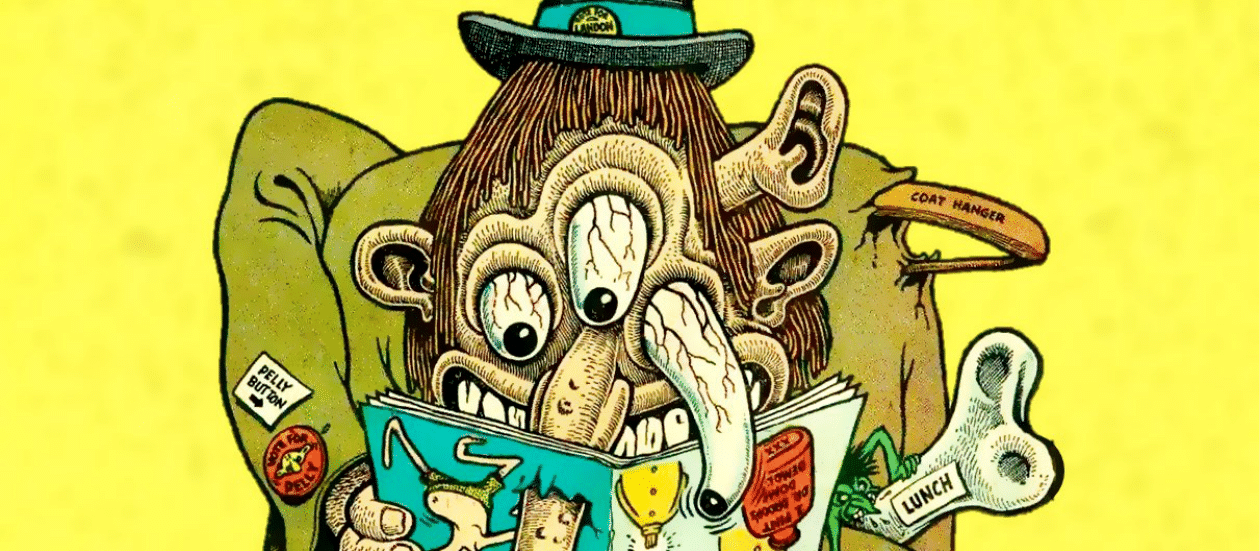


08-11-25 | Spacehawk is back! Starting this week we are serializing this classic series of sci-fi adventures, starting with The Treachery of Smebar. As you’ll find out for yourselves there is nothing quite like Spacehawk. It’s that odd combination of naïve worldview and bizarre artwork that makes his adventures both charming and nasty at the same time. Naïve yet bizarre, charming yet nasty. Those words perfectly describe the peculiar art of Basil Wolverton.
Wolverton is a minor legend in the annals of comic book history. He is revered by fans of satirical magazines such as MAD Magazine, loved by afficionados of old school science fiction and treasured by religious groups for his off-beat biblical works. Three wildly different groups, all of whom have come to love Wolverton’s unique visual signature. And I have a feeling you might appreciate him as well. So let’s travel back in time and delve into the world of Wolverton once more!
Basil Wolverton was born in 1909 and started his career as a comedy performer. After flirting with newspaper comics he abandoned the stage in favor of the pen, when publisher Novelty Press showed an interest in his take on science fiction. The storylines for Spacehawk, which debuted in Target Comics #5 around 1940, were no-less formulaic than the other Flash Gordon rip-offs at the time. Yet Spacehawk found its audience almost immediately due to Wolverton’s totally unique visual style.

The sci-fi setting allows Wolverton to dream up thousands of creatures and villain with shapes impossible to reproduced in the movies at that time. His aliens have bulging eyes, cone shaped heads, rubbery limbs and weird postures. These aren’t the crude monsters his colleagues were drawing at the time. Basil Wolverton’s take on alien life (or alien landscapes for that matter) is unique. The odd shapes, thick lines and creepy textures have been dubbed the ‘spaghetti and meatballs style’ and has been much imitated ever since, though rarely within a dramatic story of the Spacehawk variety.
Spacehawk’s early adventure depict him as a faceless hero, but Wolverton realised that revealing him in all his hyper-masculine square jawed glory added to the fun. Placing him next to reptilian or insectoid villains only made him seem more human. This contrast was lost when it was decided that Spacehawk should travel to Earth to fight the Axis in World War II. His caricatures of Nazi’s and Japanese officers have not aged well, but the quality of the artwork is undeniable. They are historical curios, or a very guilty pleasure, at best. Spacehawk soon retired, but Wolverton had just begun.

Aside from a slew of science fiction anthology stories, Wolverton was involved in creating horror stories during the horror boom of the late 1940s / early 1950s. As most of you will know vintage monster tales are a particular passion of mine. Despite being only three pages long The Man Who Never Smiled is a particular favourite. Also featured elsewhere on this website is Swamp Monster. The feverish atmosphere of these ripping yarns illustrate the incredible range Basil Wolverton had. Great stuff!
By the time Wolverton had been tempted to lend his talents to horror titles, he was already on his way to comic book immortality. Not through fanciful tales of space travel or bloodlust, but through his many comedy stories. Wolverton drew countless humour comics, notably Powerhouse Pepper at Marvel’s predecessor Timely Comics. His reputation was given a huge boost by winning the Lena the Hyena contest.

This character from the wildly popular Li’l Abner comic strip was described as being the ugliest woman in the world, but never actually seen. Readers were challenged to send in their suggestion as to what she would look like. Wolverton beat the other 500.000 entries, depicting Lena the Hyena in his trademark style. Underground legends such as Robert Crumb (a true artist, look him up if you’re not familiar with his work) were hugely inspired by this and other off-beat and, frankly, mildly disturbing works and worshipped Wolverton’s artistry. For young underground artists his style was something to strive for.
But Wolverton was never comfortable with the art his acolytes produced. Though he was very friendly with many of these young fans, he felt their underground offerings were meanspirited and gratuitous. Wolverton happily contributed to odd-ball offerings like MAD Magazine or PLOP for DC Comics. And so while true underground comics cheerfully copied the ‘spaghetti and meatball’ style, the stories themselves were too much for Wolverton’s personal taste.
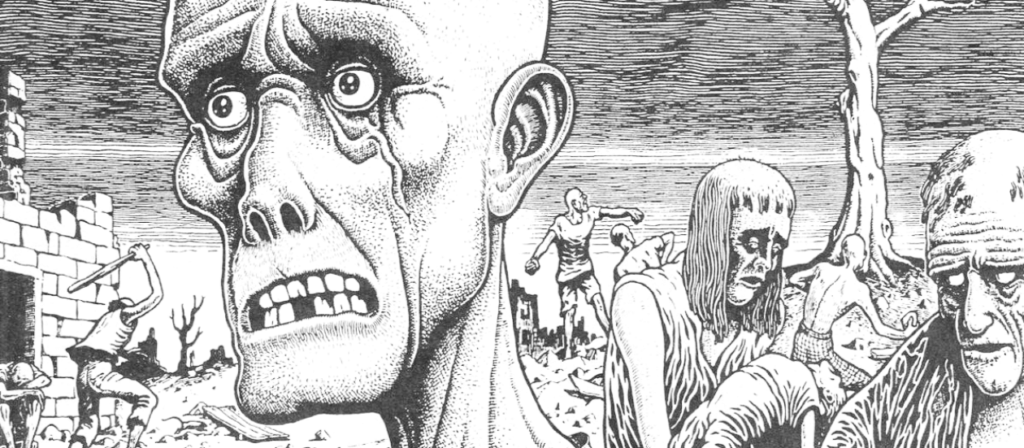
The underground artists of the 1960s pushed the boundaries, spinning tales about sex, racism, fascism, drugs and abuse. It’s safe to say that Wolverton appreciated the artists but distanced himself from the art. Instead he turned to a series or works that would become his magnum opus. Throughout the sixties Wolverton worked on a series of illustrations for Christian periodicals, which would lead to an awe inspiring tome featuring scenes from the Bible. Except for a brief spell of scepticism in his youth, Wolverton has always been a devout Christian.
This work would allow him to combine his religious beliefs and artistic talents. I’ll be the first to admit that I am not a believer and I imagine a lot of you reading this won’t be either. But please don’t dismiss Wolverton’s Biblical work. His unusual style turns familiar stories into dazzling works of art. His depictions of the ten plagues of Egypt, for instance, are unmatched! We are not dealing with tasteless Christian propaganda here. To Wolverton these works were deeply personal.
Publisher Fantagraphics seemed to agree and published a beautiful and fully restored edition of The Wolverton Bible alongside a hardcover collection of Spacehawk stories in 2009. Sci-fi fans might dismiss the biblical volume, while art collectors might scoff at buying the space adventures. And yet both of them, the ying and the yang, perfectly represent the incredible range of Basil Wolverton as an artist. Reading them I get why he wasn’t too keen on the transgressive works he supposedly inspired. Wolverton is not about shocking readers. He’s all about innocence, no matter how hideous his monster-of-the-week is.
Click here to read Spacehawk’s latest exciting adventure … The Treachery of Smebar!